

Gethsemane/Church of All Nations
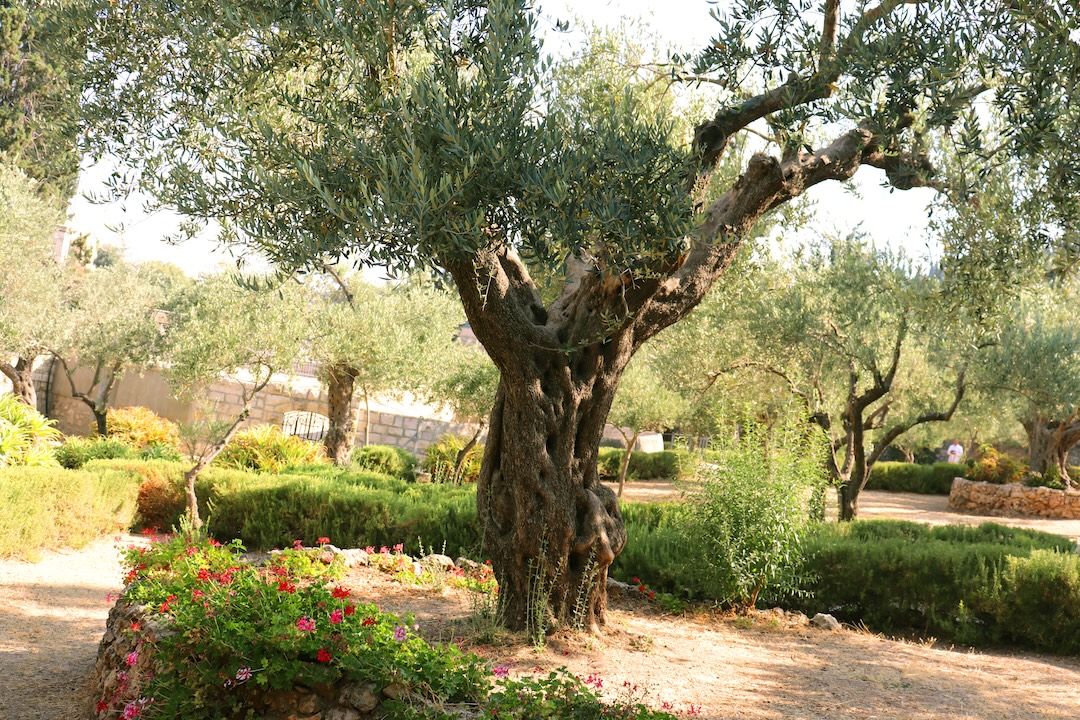
One of the most holy sites, if not the most holy site, in all of Christianity located on the Mount
of Olives in East Jerusalem is the Garden of Gethsemane. The garden contains an ancient
olive grove with some trees dating back over 2000 years. Here Christ knelt, bled from every
pore, prayed for strength, received an angelic visitation, and asked to have the bitter cup
removed. Here the Savior of the World took upon Himself all the sins of humankind only to be
immediately betrayed by Judas Iscariot, taken by those who should have been His followers,
tried, condemned, beaten, and crucified. Here the Atonement began which would allow us all
to be reconciled with the Father and brought back into His presence. All here in a little garden
named Gethsemane.
The facade of the Basilica, built to house the traditional site of Christ’s prayer, features large
Corinthian columns beneath which is a mosaic that portrays this bridge Christ forged between
God and humanity.
The Basilica of the Agony, also know as the Church of All Nations began construction in 1919
and ended in 1924 and sits on the foundation of a 4th-century Byzantine church (destroyed in
an earthquake in 746) and a 12th-century Crusader chapel (abandoned in 1345). It gets it’s
name as the Church of All Nations because it was funded by 16 different countries. The
national symbols of these countries are found embedding in the interior glass domes and
ceiling mosaics.
The church houses the traditional site of Jesus’ prayer in the Garden of Gethsemane. This flat
slab of bedrock is in front of an alter and enclosed by in iron wreath. The windows of the
church are purple-blue alabaster which is designed to make the interior of the church always
seem like night. The ceiling follows this theme with it’s star-studded blue mosaic.
Care was taken to preserve some of the original 4th-century Byzantine mosaic floors and they
are visible partially under glass inside. Other excavations uncovered a Second Temple period
mikveh or ritual bath.
Gethsemane is a beloved space for our students who can wander and ponder here in their spare time and consider the atonement of the Savior.
The word Gethsemane means “oil press,”referring to huge stones which crushed olives toextract oil. So too, in this place Christ was crushed by weight of the sins of the world and sweat drops of blood (Luke 22:44).
The courtyard in this area contains ancient olive trees, but the existing trees probably do not date to the time of Jesus. A beautiful church is on the property. It was built in 1920 and is called “The Church of All Nations” or “Basilica of the Agony”. This church does a magnificent job of artistically setting the scene and mood for when Christ spent time that important evening nearby.
For More Information About This Site:
BYU Studies Articles
Gethsemane Private Garden