

St. Peter in Galicantu
Just outside the walled Old City of Jerusalem, on the eastern slope of Mount Zion is a Roman
Catholic church know as the Church of Saint Peter in Gallicantu. Gallicantu is a Latin word
meaning “at cock’s-crow” and thus the church is dedicated to the Denial of Peter. It is believed
to be the place which, during Christ’s trial, Peter thrice denied knowing Jesus. The church not
only commemorates Peter’s denial but also his repentance and his acceptance by God as the
new leader of the church. This theme invites visitors to contemplate their own standing before
God. It stands as an invitation to repent and return to God who can and will restore.
The location of the church is believed to be where the palace of Caiaphas was located.
Caiaphas was the Jewish High Priest who sat in judgement over Jesus.
Like most sites in Jerusalem, this one was built and destroyed several times. Beginning in 457
AD the Byzantines dedicated a shrine to Peter where the church is currently located. The
shrine was destroyed by the Fatimid caliph Al-Hakim bi-Amr Allah in 1010. In 1102 it was
rebuilt by the Crusaders and lasted until 1187 when Jerusalem fell. In 1931 it was again rebuilt.
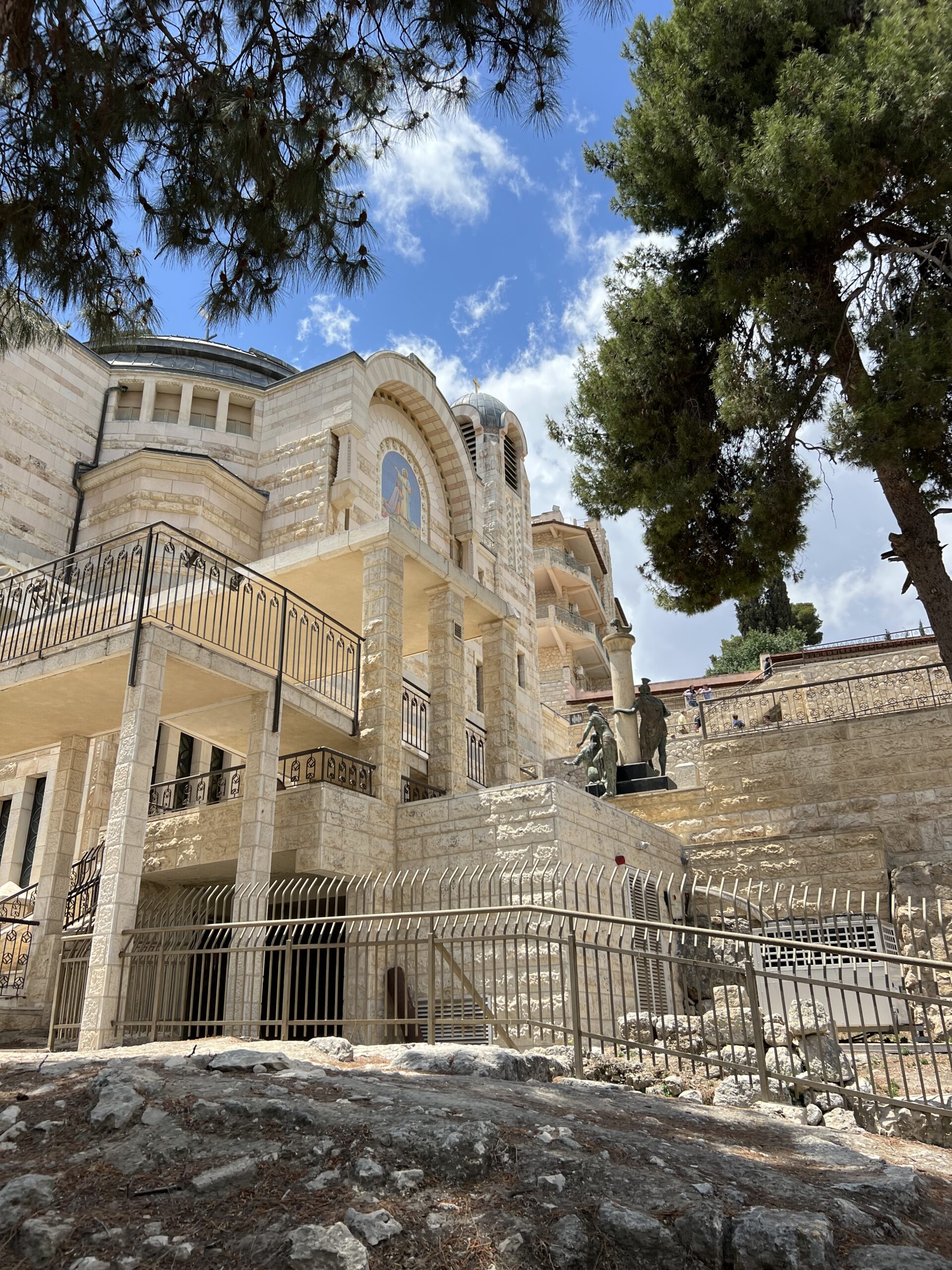
The church has a beautiful garden, a courtyard, an upper church, a lower chapel and an
ancient underground chamber. The church was designed with multiple levels to highlight the
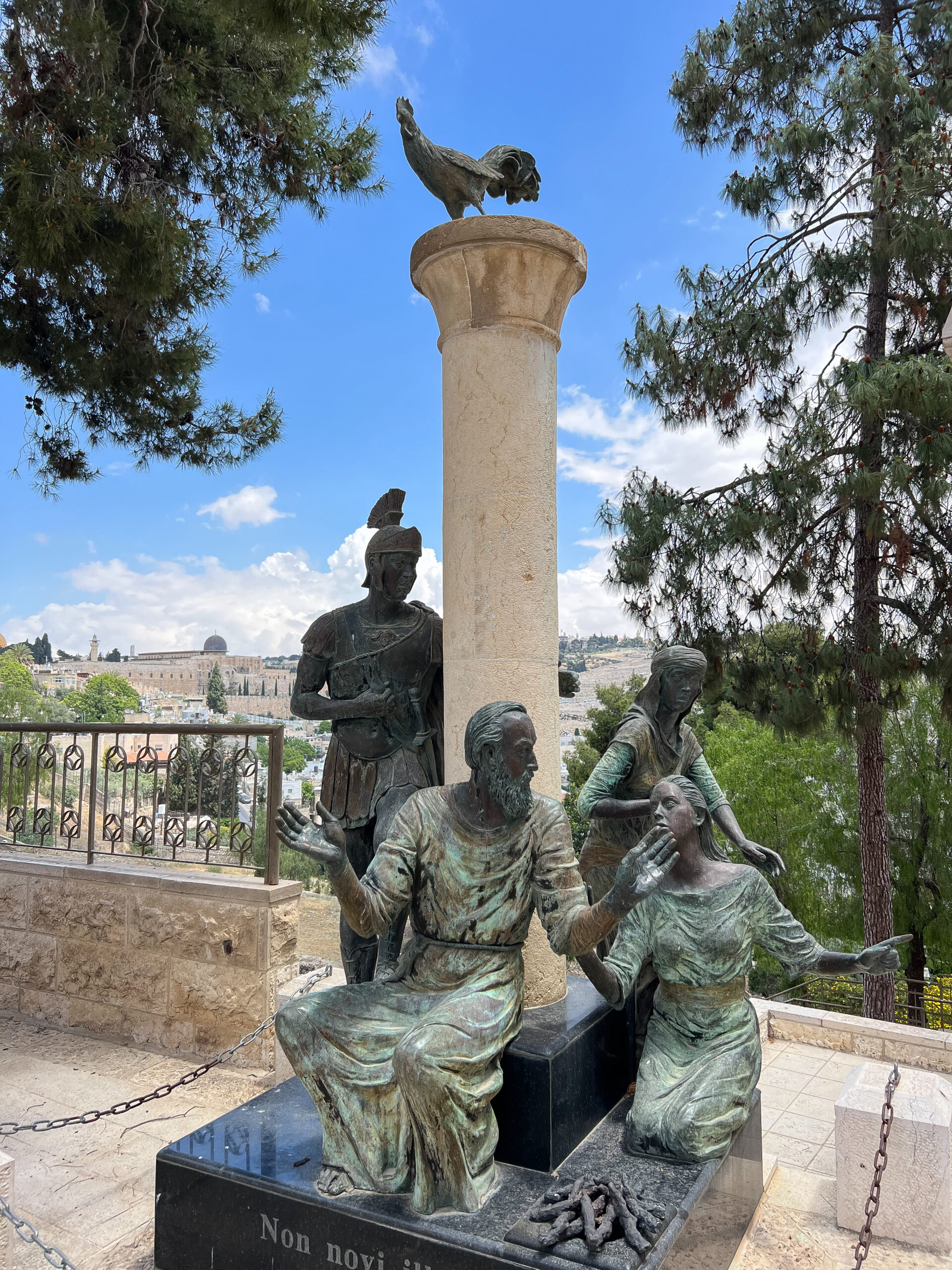
different stages of the narrative of the Passion. A statue in the courtyard depicts the denials of
Peter with a cock, the woman, and the Roman soldier. Inscribed is the biblical passage: but he
denied him, saying “Woman, I know him not”! (Luke 22:57)
Entrance from the courtyard into the church is through wrought iron doors covered with biblical
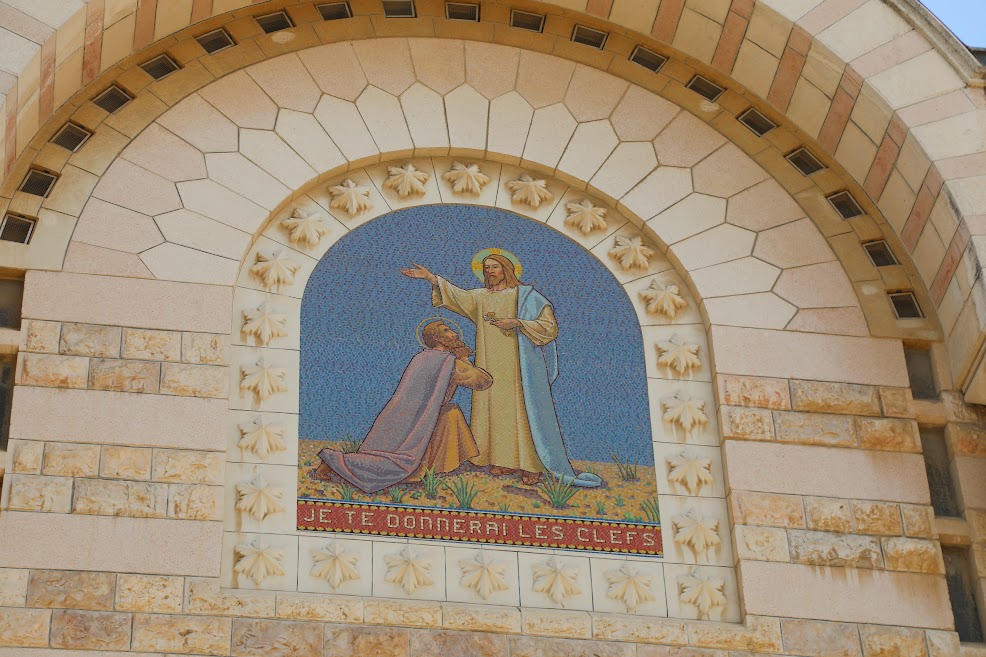
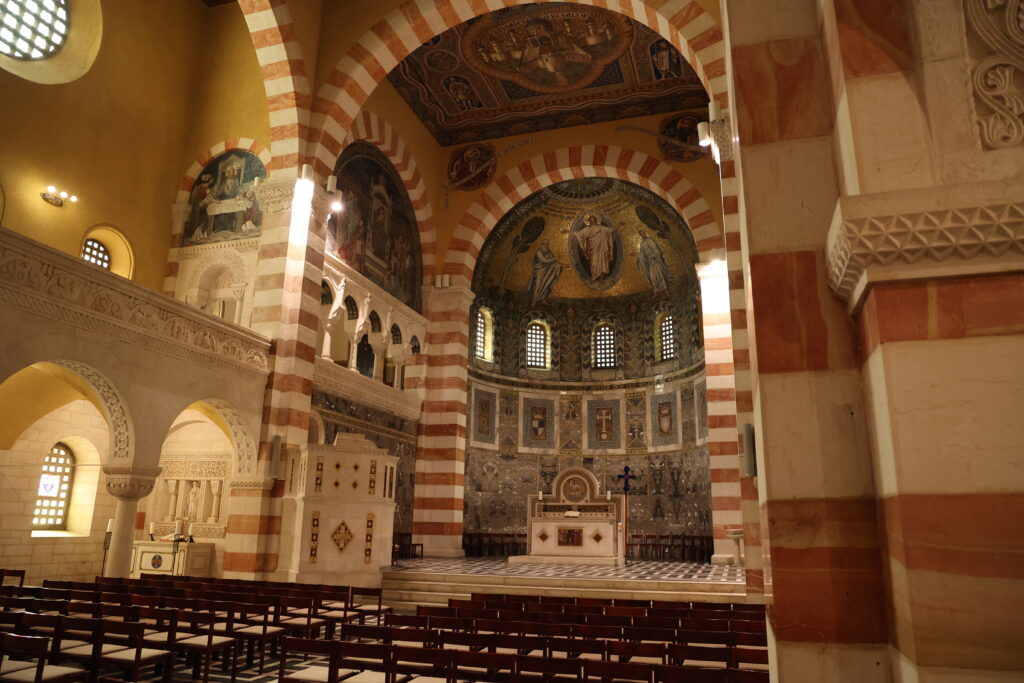
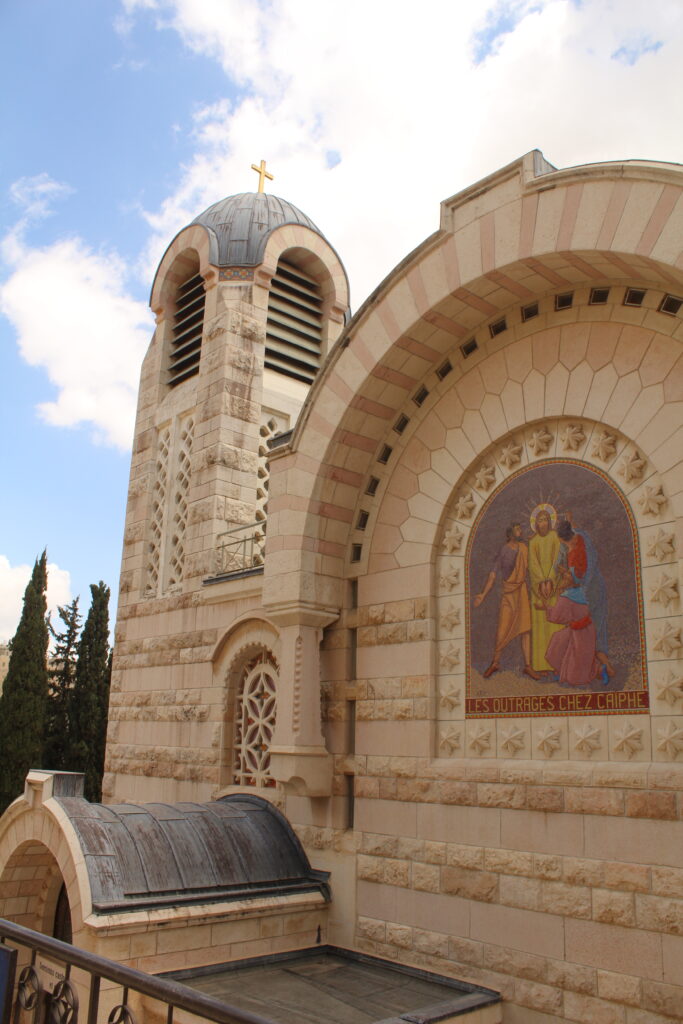
bas reliefs. There are colored mosaics in the main sanctuary portraying New Testament
settings like Jesus being interrogated, His humiliation before the guards, the Last Supper, and
Peter in ancient papal dress. The ceiling is dominated by a huge cross-shaped window
illuminated in a variety of colors. The atmosphere is meant to be solemn and contemplative.
The lower chapel has a more archeological feeling with its incorporation of stones from ancient
grottos. Caves visible through a hole in the center of the sanctuary allow visitors to peer down
at ancient engraved crosses left by 5th-century Christians that give further evidence that Christ
may have been here.
Descending even lower into the ancient underground chambers there is a succession of caves
dating from the Second Temple Period. While these caves were normal in many Roman-era
homes serving as cellars, water cisterns, and baths, many believe that Jesus was imprisoned
in these underground crypts after his arrest since traditionally this was Caiaphas’ palace. The
unusual number of ritual baths found here could be an indication that a priest resided here
since they required frequent ritual purification for sacred duties.
Finally, on the north side of the church is an ancient staircase. This staircase leads down to the
Kidron Valley and possibly was used during the First Temple period as access to the upper and
lower parts of the city.
Learn more about this site:
Leave a Reply